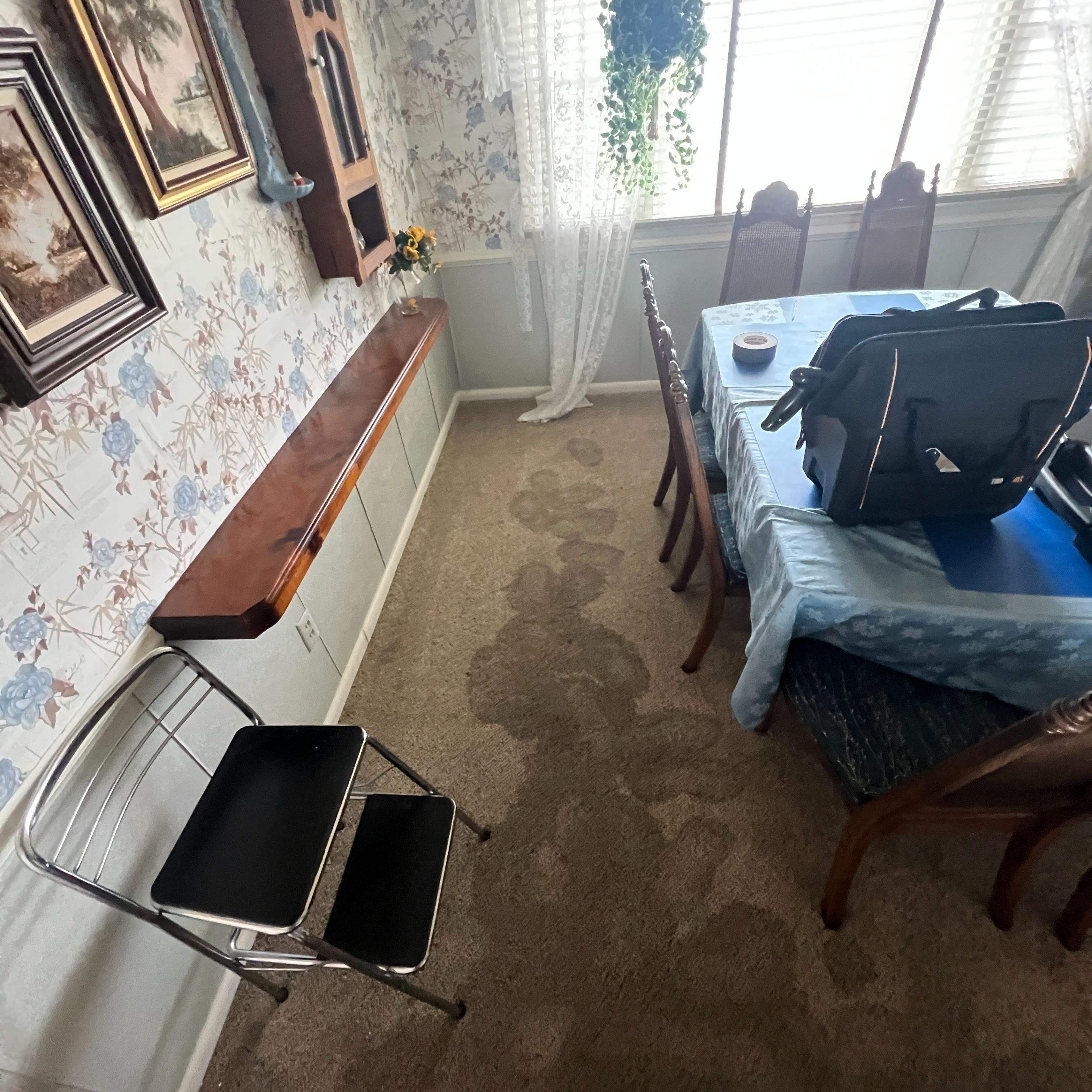
Problem 1: Water Is Actively Coming In During the Storm
If rain is still driving against the window and you see water tracking down the interior wall, the leak is live. Every gust is adding volume. The longer water sits against drywall, baseboards, and subfloor, the deeper the damage spreads. In Avian Glen storms with sustained winds over 30 mph, we have measured water intrusion at over a gallon per hour through a single failed window seal.
Solution: Contain and Document Before Anything Else
You cannot stop the storm, but you can limit the damage in the next 15 minutes.
- Move furniture, electronics, and rugs at least six feet away from the window. Wet upholstery starts wicking immediately.
- Place a plastic tarp or shower curtain against the wall under the window, then stack towels on top. The plastic protects the floor while the towels absorb.
- Photograph everything before you clean. Wide shots of the room, close-ups of the window, the wet wall, and any damaged contents. Insurance adjusters want timestamps.
Do not cut into the drywall yet. That is a step for after the storm passes and a professional can read moisture levels properly. If the window is on an upper floor and water is pooling on the sill, you can also drill a small weep hole at the lowest point of the interior trim to redirect water into a bucket rather than letting it run behind the wall. This is a temporary measure, but it can save several feet of baseboard and the carpet pad along the wall line during a long storm cell.
Problem 2: The Storm Has Stopped but the Wall Is Still Wet
This is where most homeowners underestimate the damage. The visible drip stopped, the carpet under the window feels damp but not soaked, and the assumption is that a box fan will dry it out. The reality is that water has likely traveled down inside the wall cavity, saturated the bottom plate, and is now sitting against your subfloor. Drywall pulls moisture upward through capillary action, so the stain you see at three feet is often fed by water pooled at the floor line.
Solution: Get Accurate Moisture Readings
A surface-dry wall can still hold Category 1 water (clean rainwater) in the cavity for days. After 48 hours, that water typically degrades to Category 2 as it picks up contaminants from insulation, dust, and building materials. After 72 hours, mold colonies can begin forming. Our technicians use pin meters, thermal imaging, and infrared cameras to map the actual wet footprint behind your finishes. If you want to understand how this hidden movement works, our guide on water damage behind walls and hidden leak detection covers the diagnostic process in detail.
Problem 3: The Ceiling Below Is Now Showing Stains
Second-floor window leaks often reveal themselves on the first-floor ceiling. Water exits the window cavity, runs along a top plate or joist, and surfaces feet away from the actual entry point. By the time the ceiling stain appears, the insulation above it is usually saturated and the drywall is at risk of sagging or collapsing.
Solution: Address the Ceiling and the Source Together
Treating only the ceiling leaves the original wall cavity wet, which guarantees the problem returns. Our crews open small inspection points, extract trapped water, and dry both areas simultaneously with directed airflow and dehumidification. For a deeper look at the ceiling side of this issue, our breakdown of ceiling water damage repair and restoration walks through what salvageable looks like versus what needs replacement.
What to Watch for in the First 48 Hours
Beyond the obvious stain, look for nail pops, hairline cracks radiating from a ceiling fixture, or a faint bow in the drywall when viewed from an angle. Light fixtures and recessed cans are common collection points because the cutout breaks the ceiling plane. If you see water dripping from a fixture, turn off power to that circuit at the breaker before touching anything. Wet drywall holding more than a gallon of water can fail without warning, and a sagging ceiling near a light box is one of the clearest signs that controlled drainage is safer than waiting.
Problem 4: You Are Worried About Insurance Coverage
Most homeowner policies in Avian Glen cover sudden and accidental water damage from storm-driven rain, especially when wind compromises the window envelope. What they typically do not cover is long-term seepage, deferred maintenance on caulking, or damage from a window that was already leaking before the storm. The line between covered and denied often comes down to documentation in the first 24 hours.
Solution: Build a Clean Claim File
- Save weather data for the storm, wind speed, rainfall total, and time stamps from the National Weather Service or a Avian Glen weather station.
- Keep all wet materials and photographs until the adjuster releases them. Do not throw out the soaked baseboard before it is logged.
- Request an itemized scope from your restoration contractor. Avian Glen Water Restoration provides documentation written in the language adjusters expect, including IICRC S500 references and Category and Class designations.
Storm-related window failures are also closely tied to broader roof and envelope issues. If hail or wind hit your roof in the same event, the storm damage restoration side of the claim may be larger than you realize. Filing the window leak and the roof inspection on the same claim number, rather than splitting them, usually results in a single deductible and a faster overall payout.
Problem 5: You Are Smelling Mildew Within a Few Days
That musty smell is microbial growth starting in the wall cavity, insulation, or carpet padding. Once you can smell it, spores are already airborne. Bleach on the surface does not address what is growing behind the drywall.
Solution: Remove the Affected Materials and Dry to Standard
Wet fiberglass insulation does not recover. Wet cellulose insulation never recovers. We remove compromised insulation, treat framing with an antimicrobial, and run commercial dehumidifiers until moisture content drops below 16 percent on wood and below 1 percent above dry standard on drywall. Cutting corners here is how you end up with a mold remediation project six months later. Once the structure is dry, we also recommend a follow-up inspection of the window flashing, sill pan, and exterior caulking before any drywall closes back up. Sealing the interior over a compromised exterior detail simply hides the next leak until the following storm.